Commando: The Movie of The Eighties

Ah, Commando. I love this movie. And I hate this movie. I hate that it has some simple yet obvious continuity problems. I still wake up screaming knowing that Bennett’s chainmail is actually crocheted.. I just hate the way the bad guys are just mindlessly mowed down by the hundreds, while they can’t hit anything themselves. You can see them fall on mattresses and you can see the building that blow up to be just empty sets and not actual buildings.

But I love this movie. It’s the perfect 80’s Schwarzenegger-movie. It’s not the best Arnie-flick out there, not by a long shot. But it’s just so perfect.

First thing I always think about when I’m reminded of this movie is the soundtrack. Is the soundtrack objectively good? I don’t know, but it’s memorable. Just listen to it! What the hell is going on there? Jamaican steel drums, flutes, synths, horns, saxophones, it has it all! Say what you will about the soundtrack, but it’s not your standard movie score with blaring horns and orchestration (sure, it has some, but still). Instead, they have Caribbean steel drums. Who the hell came up with that idea? I have never heard anything like it. And never will. Today things like this are meticulously calculated, and run by a focus group. You don’t get complete surprises like this anymore. Commando sounds like a walk through Caribbean beach on your way to a jazz-club.

Second thing, right after the soundtrack, is the dialogue. Have you ever seen a movie where the dialogue consists solely of one-liners? You haven’t, since that movie does not exist. But Commando comes closest.

And the opening credits are basically a celebration of fatherhood and fathers relationship with his daughter, wrapped in a sitcom. In a super-macho eighties action-movie starring Arnold Schwarzenegger. Yeah, I have no idea what’s going on here.

So what about the story? Arnies daughter (played by 12 year old Alyssa Milano) is kidnapped and Arnie is blackmailed to kill a ruler of foreign country so this two-bit dictator can return to power. Instead of doing that, Arnie decides to kill everyone who opposes him.

The baddies are all one-dimensional. They have no background, no story behind them. It kinda feels like there was a movie before this one that explained what’s going on with the other characters, but there is none. They mention things that happened earlier, but it’s just a mirage. There is exactly one scene that hints of deeper motivations: when the kingpin describes his footsoldiers (who are later mowed down by the hundred) as “patriots” (blink and you will miss it, scene last for three seconds). But we are not told of anything more. Why do they follow him? Why do they feel their opponents are evil? What makes them think they are the heroes of their own story?

The main baddie is Bennett, with his crocheted “chainmail”. He’s played by Vernon Wells, of Mad Max 2-fame. I admit: I still can’t see the resemblance. It’s the same actor couple of years apart, and they look nothing alike. Granted, on Mad Max he looked like a punk-rock biker, while on Commando he’s sporting a porn-stache (and crocheted chainmail. Have I mentioned that he’s wearing a crocheted chainmail? HIS CHAINMAIL IS CROCHETED!). That piece of facial hair is working overtime in this movie. Wikipedia describes him as a “character actor”. Looking at Mad Max and Commando, we can say that he’s a character all right. Bennet gets killed by having a pipe thrown through him with steam pouring out of it (“Let off some steam Bennett”). Trust me, it makes sense in the movie. Kinda.

Looking at the other baddies, we have a kingpin/dictator, who is quite forgettable. He doesn’t even get a memorable death, just gets blasted with a shotgun, with no one-liner. Forgettable and unremarkable death for forgettable and unremarkable character. We have the Hawaii-shirt tourist-henchman who gets his neck-snapped first thing by Arnie (“Don’t bother my friend, he’s dead-tired”). One of the more memorable characters is Sully, the creep/sleazeball/toxic douchebag. He gets dropped from a cliff (“What happened to Sully?”, “I let him go”). There’s the ex-Green Beret who gets beaten up and impaled by a metal spike (“I eat green berets for breakfast, and right now I’m very hungry”). Rest are generic footsoldiers who get shot/sliced/stabbed/blown up without any thought given to them.

Of the actors few are notable, besides Arnie himself. Ex-Green Beret is played by Bill Duke, who would appear few years later alongside Arnie again in the greatest action movie ever made, Predator. Sully is played perfectly by David Patrick Kelly, who would later appear in Twin Peaks. His sleazeball-performance is still eerily accurate to this day. Just goes to show that decades may come and go, sleaze will always be with us, unchanging. Arnies reluctant (at first) sidekick is played by Rae Dawn Chong. One good thing is that they didn’t shoehorn a romance side story to the movie. There’s not even a hint of romance, no longing glances or accidental kisses. She is also the only woman in the entire movie.

So there you have it. Commando: Movie of the eighties, by the eighties and maybe for the eighties as well.
Everybody Relax, I’m here: In praise of “Big Trouble in Little China”

One of the more popular ice-breakers when meeting new people is “So, what are some of your favourite movies?”. And the answers are often familiar: Raiders of the lost ark, 2001: a Space Odyssey, Godfather. But some people have an oddball-answer that most other people don’t have. For me that answer is “Big Trouble in Little China”. I think it’s in my top 5 movies of all time.

Big Trouble is directed by one and only John Carpenter (who is one of my favourite directors of all time. Go figure). His experience in making this movie, and the reception it had upon release, caused him to kiss Big Hollywood goodbye and continue his career as an independent filmmaker. The movie flopped financially, and critical reception was lukewarm. Yeah, people don’t know a good thing when they see it. It has become cult-classic since, so there is some justice in the world.

Plot of the movie is quite straightforward and filled with tropes. Jack Burton (played by Kurt Russell) is friends with Wang Chi (Dennis Dun) whose fiancé is kidnapped by gangsters. The rescue-mission that follows takes them deep in to San Francisco’s Chinatown and turns in to a battle against sorcerers and ancient evil. That’s all you need to know for now.

This is gonna take crackerjack timing!

I was about 10 years old when I saw this movie. It was one of the very first movies I had seen where Asian characters played a prominent part (very first was probably the “Aces go places” movie-series). And what’s more, this was the first movie I saw where Asian and Western characters mingled and were friends, and it wasn’t made a big deal (there is exactly one line of dialogue where different ethnic backgrounds of the two main characters is referred to).

Like I said, there are tropes, at least on the surface. There are damsels in distress and orientalism. When this movie was released (1986), mainland China was still somewhat closed and mysterious to the West. But I wouldn’t call the movie racist or sexist, even with the tropes. The main villains are Chinese (which is natural, as the movie draws from Chinese mythology), but so are the heroes. The movie could very easily turn in to the classic story of western hero saving the day from the evil and different “others”. But this does not happen. Jack Burton acts as a spotlight that shows us the strange events happening around him. He is constantly confused and outclassed, while everyone else around him seem to know and do more. Jack Burton is the western audience barging in to something that goes way beyond him. This is basically spelled out in the movie, as he is confused by yet another aspect of the mysterious events happening around him, and the main bad guy, Lo Pan, says: “Shut up Mr. Burton, you were not brought upon this world to “get it!”. He was brought there so we could take part in the events.

And the damsel in distress is a badass. Yes, I had a crush on Kim Cattrall.

Oh, my god, no. Please! What is that? Don’t tell me!

So why is this movie good? Well, it ticks a lot of boxes. The characters are likeable or at least interesting, they have chemistry between them. The movie is infinitely quotable. It’s funny. It has action. It doesn’t take itself too seriously, but it takes itself seriously enough. How much of this is because I saw this movie as a kid and was impressed and it became part of my psyche? Shuddup. If Taika Waititi lists “Big Trouble” as one of the main inspirations for “Thor: Ragnarok”, I will gladly appeal to authority if needed!

And I feel this is one of the movies where it alludes to bigger things that exist beyond the movie, but are never talked about in detail. I know that is how most movies seem to be today, but back in 1986 it wasn’t done. Yeah, I’m still wondering what “black blood of the Earth” actually is.

This movie might not be for everyone. Maybe younger generations will find it dated (there are rumours of modern remake in the works, starring Dwayne Johnson…). Maybe most people would hate it if they watched it now. I don’t care. I love it. You know what ol’ Jack Burton would say if someone admitted to hating “Big trouble in Little China”? “Give me your best shot. I can take it.”

MacBook Air with Apple M1 processor, a review

I’m kind of angry right now. For years we have been using computers that seemed to be very fast and energy-efficient, but it was only so because we didn’t know of anything better. And now we know. It could have been so much better.

The computer I’m typing this on is the new MacBook Air with the Apple M1 processor. This is the cheapest laptop Apple currently sells, with 8GB of RAM and 256GB of storage. I have tried to make this computer feel slow (common knowledge says 8GB of RAM is the absolute minimum you need to have workable computer these days. And while workable, it would never feel fast), and I have failed. Before this computer, my main computer was maxed out 2015 5K retina iMac with 32GB of RAM. That computer sometimes feels slow, and when it does, I can hear the fans just blasting away. This MacBook doesn’t even have a fan. It’s completely, totally silent, and it just goes.

And it goes for a long time. I charged the laptop to 100% on Saturday morning and unplugged it at around noon. I spent the day installing apps, testing out how iPad-apps work on this computer (more on that later), surfing the web, watching YouTube, quickly testing some games and running Xcode. And I continued this on Sunday, spending even more time with Xcode and Youtube. At around 8pm the battery was at around 20%. After 2 days of heavy usage.

I keep on thinking that something has to give. “The computer is fanless? It must be slow as it can’t be properly cooled!”. No. This computer is outrageously fast. “It’s fast, and it’s thin and light? It must have poor battery life!”. No, the battery seems to last forever. Yes, you can have it all. You can have excellent performance and outrageous battery-life, in a device that is totally, 100% silent. And this is the cheapest laptop Apple sells! While the price is not bargain-basement price that you can have with cheapest PC-laptops, it’s not expensive. And let’s just say that with those you super-cheap PC-laptops, you get what you pay for.

This laptop is so good that it’s kinda of a problem for Apple. The new M1-laptops have more or less made all of their Intel-computers obsolete. Only reason you might need one is if you really, REALLY need lots of RAM (current M1-models max out at 16GB). But even then I routinely see benchmarks where the new laptops outperform Intel-based Macs with twice the memory. And if you really need all the processor-performance you can get, there’s still iMac Pro and Mac Pro with massive multicore-CPUs. Those are desk-bound behemoths with starting prices 5-6 times higher than this MacBook Air. These laptops have no right being this fast. But they are. It does make you think what they are going to be releasing in upcoming months, as they introduce their processors to their higher-end products. They have now replaced their low-end products (Mac mini, MacBook Air and cheapest MacBook Pro), just what exactly do they have in store for us for the higher end?

One of the things of using Apple products is the overall “niceness”. And it’s something that you can’t measure or benchmark. But this computer just feels nice. And it’s something you don’t realise until you have it. Having no fan means you don’t feel any slight vibration from the fan against your hands. You never feel any uncomfortable heat emanating from the laptop. You never hear whooshing air or the fan humming. Or hell, how about a trackpad that doesn’t suck? You will never know to want those features until you have them, and you will only miss them when they are taken away from you. This computer takes that niceness to a new level. It’s outwardly identical to previous model, but the silence and coolness are just out of this world.

Yeah, this computer runs iOS-apps. I’m two minds on this. Individually I see it as a clear benefit, as the selection of applications has suddenly gone way up. For example, I can (and do) have Overcast running on this computer, which is a clear benefit for me. But on the other hand, I worry that developers might decide to not create kick-ass Mac-apps anymore, and instead they will just offer their iOS-apps for the Mac as well. Which, even at best of times, will feel about 95% native to the platform. We might lose that last bit of integration and polish that makes an app truly great. I’m happy for the short term, while nervous for the long-term. We will see in year or two how it turns out.

Yeah, some iOS-apps don’t really work on MacOS, and they feel like a kludge. But then again, you are not required to run them, they are just an additional alternative for you. But like I said, I worry that in the future those alternatives might become the only choice.

Oh, there is also the new MacBook Pro. Everything I have written here also applies to that computer. It costs few hundred more than the Air, while having a bit brighter display, better microphones and speakers, even better battery life, a fan that helps with sustained performance and Touch Bar. Whether those features are worth the extra money is up to you. But it is a superb computer as well.

Bottom line

This computer is the best, most exciting computer I have used in a long time. I know, in the end it’s just a MacBook Air that looks exactly like its predecessor. But it is about 2-3 times faster than its immediate predecessor, while having battery-life that is about twice as long, while having no fan at all, and running cool to the touch. Any one of those improvements would have been truly huge improvement, but we got them all, simultaneously, with no downsides at all. It’s kinda telling that the one complaint in the reviews is “the webcam, while overall a bit better than before, is still mediocre at best”. You know we are scraping the bottom of the complaints-barrel, when we are talking about the webcam. But that’s because it really is the only thing about this computer that you could really complain about, and even that downside is workable. It just stands out negatively, as everything else about this computer is just so good.

If you are in a position where you are thinking of getting a new computer, this is the computer to get. This computer has made me feel excited about computers again. Make no mistake, the hype is real.

iPad pro, the laptop replacement

Whenever we get a new models of iPad, we get multitude or reviews and opinion-pieces that all have the question: “can the iPad truly replace my laptop?”. The new iPad pros we just got were no exception. I was just reading an excellent essay by Craig Mod on this very topic, when I started to really think about this. He does love his iPad, but feels that it has shortcomings that need to be resolved, especially when it comes to the software, before it can replace a laptop. And sure, things could always be better.

Just to note, this post is not as much to refute his comments and thoughts, his essay just made me think about this situation. And I will be just talking about iPads here, because honestly: who cares about Android-tablets?

It seems to be when reviewers are saying things like “iPad can’t replace my laptop”, they are approaching this from the wrong angle. I mean, they obviously already have a laptop, with software, workflows and tasks that have been honed over the years to work in specific way that works for them. Then they try to remove the laptop from the equation, taking the software with it, drop in an iPad and see “does this replace my laptop”. Well, if you go about it like that, no it will not. Or at very least, you will be fighting against the system all the time. Hell, it would be painful for Mac-user to switch to Windows, or vice-versa, of course it would be even more painful to switch to iOS, that is even more different, with different hardware as well.

What I feel the iPad and it’s status as the “future of computers” is about is to cater to the paradigm shift we have experienced in the last 10 years or so. For massive number of people, their phone is their main computer. 15 years ago, the amount of “computing” that was done by end users, was overwhelmingly done on devices we would recognize as “traditional computers”. But today I bet that most of the computing is done on phones. For many people, traditional computers seem like anachronism. And it’s those people iPad is targeting. It’s just like their phone that they are already using all the time, just more so.

And sure, there are still some low-hanging fruit (relatively speaking) that could be fixed on iPads to make it work better for everybody. One complaint is that if you want to write software, you need a traditional computer. So port Xcode to iPad. That would take care of lots of complaints. Maybe move some of the functionality to cloud (code hosted on Apples server, where it’s also compiled), so it could run well on iPad. Or how about actually supporting things like USB memory-sticks? Robust keyboard navigation? So yes, there are things to be done. But it’s doable, and fixing just couple of issues would solve most issues people currently are facing.

Another issue is third-party software. Software-developers need to treat the iPad as a powerful workstation it is. We are getting there, but it is taking time. Next year one major hurdle is crossed when Photoshop for iPad ships. the benefit of that is twofold: it brings to iPad a genuine hi-end piece of software that is used for “serious business”, and it shows to people and other companies that yes, you can have hi-end software on the iPad. Software-companies: Photoshop for iPad is coming, what’s your excuse for not shipping your software for iPad? Because your software is a precious snowflake?

But I do feel that some of the common complaints directed at the iPad are misguided. One common complaint is that you can’t have two copies of an app running side by side. For example, two copies of text-editors so you could compare two documents. This begs the question: isn’t this up to the app-makers to fix? I’m typing this on my iPad using Ulysses. Why should I be running two copies of Ulysses if I wanted to compare two documents? Why couldn’t Ulysses support opening two (or more) documents at the same time? So I would have one copy of Ulysses running, with it showing more than one document? One issue we do have is that if you run several apps using split-view, you can’t share an app among different views. So if you have Safari and Mail sharing one view, you can’t have Mail and Photos share another view. But again, that seems like a fixable thing.

I have a feeling that when we get iOS 13 next year, it’s going to be a big step forward for iPad. Don’t ask how I know, it’s just a hunch. But we are at the point where iPad-hardware is insanely good, with promises of “future of computing” ringing in our ears. It’s time we have operating system and software that is as far along as the hardware is.

As a sidenote: I find those articles that ask “can iPad replace a laptop”, to be quite annoying, as we all have different wants and needs. For many, iPad has already replaced a laptop. And for many many more, it complements a laptop. There is no universal answer to the question “does iPad replace a laptop”. The answer, as usual, is “it depends”. There is no universal computing solution that is the perfect solution for everybody. I’m annoyed when people try to make their personal wants and needs the universal truth that needs to be catered to.

Some might say that the real question is “does it do everything a laptop does?”. Well, kinda. But then again, it’s a different type of device. Does laptop do everything iPad does? Mostly you can do the same things on both devices, but you do them in a different way. Which way you prefer, is a personal opinion. But the actual things that you really can’t do on an iPad are getting few and far between.

The new iPad Pro, first impressions

I have now had the new iPad Pro (11”, 64GB, WiFi) for couple of hours. And I absolutely love this device. I moved up from 1st generation 9.7” iPad Pro. I could have used that device for a while longer, but my wife needed an iPad, so I decided to gift her my old iPad and buy the new one. So here we are. I’m a loving husband, after all.

The all-screen design (it’s not really ”all screen”, but we are getting there) is really great. It might seem like a small change, but using this device feels different, as you just have the screen in front of you. No buttons, minimal bezels. It feels like some sort of threshold has been crossed here. When iPad was released Apple talked about “magical piece of glass that transform to anything you need it to be”. And for the first time, this is it. When they announced this device, they said “this is the iPad we have always wanted to build”, and I believe them. And that “magical spiced of glass” extends to the next point: screen and interaction.

The 120Hz screen coupled with the ludicrous performance this thing has really pushes the UI away from the uncanny valley. It’s starting to feel that your are not using a piece of technology with a screen, but rather, we are getting to the are of perfectly natural interaction, like what we have when we interact with object in real world. There’s no latency anywhere that I can see. Traditional computers, Macs included, are starting to feel archaic when compared to the UI-interaction of this thing. This feels like a device from the future.

I got the keyboard-case as well, and while it looks very similar to the keyboard-case I had on my 9.7” iPad, it feels way better. I’m typing way faster on this keyboard than on the old keyboard. Don’t know what the difference is like when compared to the previous 10.5” iPads keyboard case as I never used that device (except playing with one in store for few minutes). The device also seems to be very stable and sturdy when typing with this keyboard. On my old device I had the issue where the keyboard did not sit flush with the table, but it was elevated by few millimeters, resulting in slight wobble when typing. This keyboard is flat and rock solid.

And, of course, I went with the whole trifecta and got the pencil as well. It feels solid in hand, but I haven’t used it much yet. Am not yet sure if I like the feel of it better than the previous pencil. I liked playing with the cap of the previous pencil, and this pencil has no cap. Objectively it’s way better, it attaches and chargers magnetically, and it works just as well as you expect. Magnets, how do they work?!

One real downside of the new iPad is pricing. This thing is way more expensive than previous generation. I was going to move up to 12.9”, but the eye-watering pricing meant I had to stay on the smaller device. 11” iPad costs the same as the previous 12.9” iPad. To add insult to injury, Apple did announce that they will keep on selling the older generation 10.5” device for a lower price. But the “lower price” is the same price they were originally selling it at. Come on!

So yeah, this thing is expensive. But it’s just so damn good. Hell, it’s faster than most of the Macs Apple currently sells. It’s crazy. Granted, iOS doesn’t take full advantage of that power. Maybe next year.

Miscellaneous things

There’s no headphone-jack. Wireless is the future. Accept that and move on. I know I did.

There’s USB-C! For shit and giggles I plugged in a Dell USB-C hub, with VGA, HDMI, Ethernet and some other stuff. And it works! Well, at least HDMI did, but I don’t see why the other ports wouldn’t work as well, as iPad does support them. Yes, that includes Ethernet.

This is my first device with FaceID. It works, and we need to have it everywhere.

The Mini was the One

Mac Mini is in dire straits. As of today it has gone without updates for 1229 days. Last time it was updated, we were still expecting our daughter. Now she’s talking and walking. When Apple executives invited bunch of pundits to reassure them of the future of the Mac, they said of the Mini “it remains a product in our lineup”. Tim Cook tried reassuring that it has a future, but he didn’t promise anything tangible either. This troubles me, and not just because I’m in a market for a new Mini. I have a connection to the Mini.

Let’s go back in time by 15 years or so. For years I had observed the Mac-community from a distance. I curiously watched the keynotes, trying to figure out what was it that made the company and its products so appealing to so many. Occasionally I trolled Apple-related discussions, berating people for buying “overpriced computers” and listing spec-sheets that proved how crappy their computers were and how they just didn’t understand. But deep down I felt that it was me who did not understand. These people had understood something that I was missing.

In Macworld 2005, Steve Jobs announced the Mac Mini. “The most affordable Mac ever. People who have thought about switching have no more excuses”. I was intrigued.

Apple wanted to release a computer that had low barrier of entry. It was inexpensive, which helped to make it easy to buy. It was small and quiet, which made it easy to own. Had they built it from normal components, in to a normal sized computer, they might have been able to make it a bit cheaper. But would it have mattered all that much if it were hundred bucks cheaper? Not really. But I bet it would have mattered a lot had it been sized like a normal computer. And not in a good way. Had the Mini been the size of a normal computer, it would not have been as appealing since owning it would have required bigger commitment. It would have meant more obvious technology in your life. Being so small, the Mini could be lost in a typical workdesk. You could own one, and lose it among your papers on your desk.

Mac Mini didn’t look or feel like a computer. It felt like a friendly appliance, an aluminum box where some computing-stuff happened. This was reinforced by the box it shipped in, with its friendly handle. You could pick one up at a retailer, just like you picked up a sixpack of beer at your corner-store. It was as easy as it was friendly.

So I bought one. Logic was that if it didn’t work out, I could sell it, and I wouldn’t lose all that much. I used OS X for the first time in my life, and noticed that gradually I used the Mini more and more. Everything just worked, everything was so easy and polished. Using my PC became a chore, as it was big, noisy and clumsy. Not to mention the software that ran on it. As time went on, I started noticing things that simply were not as refined on the PC. In theory it did everything Mac OS did, but it did it worse, with less elegance.

My PC was powerful, yes. It was custom-built computer, running Windows and optimised Gentoo Linux. I dread thinking how much time I spent compiling all my software from scratch, just so it would be optimised for my exact computer. It was the polar opposite of the Mac Mini. But mostly that power went unused. It had lots of power to do things I really liked to do on the Mac instead. So I did those things on the Mac, even if it had less power. The PC was superior in ways which did not matter, the Mac was superior in ways that did matter. When my PC broke down, I never bothered to fix it. And I never looked back.

In your typical bullet-point comparisons the benefits of the Mini were not obvious. It had less megahertz and megabytes, so surely it was a worse computer? No, it wasn’t. You can’t measure the niceness of a product, nor can you list it in a spec-sheet. And that applies as much today as it applied twelve years ago, when I bought my first Mac. And it’s still something that the detractors are missing. They boil the product down to raw numbers, and use them to determine the winner. But that’s not how we buy our cars, or homes, or choose our partners. Why should we buy our computers like that? Why should a computer be less personal choice than those other things are?

That Mini is now gone, sold on to a Mac-enthusiast. But it’s grandchild sits in my closet, serving files and media in my network. On my table is an iMac, in my pocket is an iPhone, in my man-purse is an iMacbook and next to my television is an AppleTV. But it all started from that small, humble, unassuming computer. The Mini was the One.

Of Things We Wear on Our Wrist

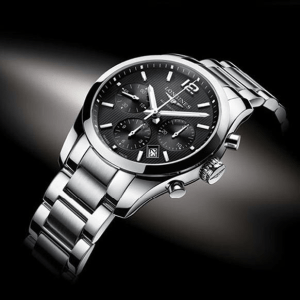
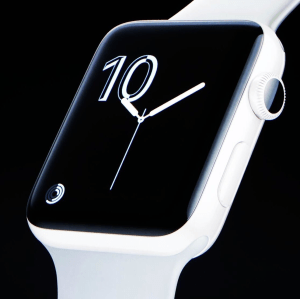
Here are two things that you might recognize:

Their features overlap a bit, but they are not really alike. Yes, you strap both of them to your wrist and they both tell time and date. That’s where the similarities end. Incidentally, that’s also the full description of the functionality of one of those devices.

Ben Brooks wrote an article about one of those devices. The Apple Watch to be precise. I encourage everyone to read it, he’s a good writer and it’s a good article. While you are at it, give him a subscription as well.

In his article he listed pros and cons of the device. I will not talk about the lack of “statement” (which is subjective) or lack of “smarts” (which it has way more than normal watches do). I will talk about about battery-life. Ben mentioned that the battery-life is terrible (“18 hours, at most”), especially when compared to traditional watches. There are two points to tackle in that: the battery-life of the device as is, and battery-life when compared to traditional watches.

True, Apple makes certain promises when it comes to the battery-life, which Ben quotes in his article as a negative. But the thing is that they underpromise. I wear my watch (Series 3, 42mm, no LTE) 16 hours a day, and have about 75% left at the end of the day. That’s without any workouts. With workouts it’s maybe about 60%. My wife has 38mm Series 1, and she has about 50% left at the end of the day, without workouts.

Whether Apple should underpromise when it comes to battery-life is a different discussion. But it’s pretty safe to say that the battery lasts longer than 18 hours in typical use.

Then we have the other point: battery-life when compared to traditional watches is terrible. Sure, maybe. On traditional watches the battery-life can be measured in years. Some have no battery at all, using the kinetic energy of your moving arm. That good and all. But does it matter? Watches are not smartwatches. They do fraction of what smartwatches do. They tell the time and date, and that’s about it. And mechanical watches are not even very accurate timepieces. Smartwatches do all that traditional watches do, plus they monitor your vitals, have your calendar, emails, messages, phone. They hail your ride, pay your groceries, track your water-intake, your calories, your exercise.

Saying that Apple Watch has terrible battery-life when compared to traditional watch is like saying that traditional watches have terrible battery-life when compared to sundials (sundials don’t have battery, but you get the point). It’s true, but it’s not really relevant nor is it a valid comparison.

At this point some might be saying “why isn’t it a valid comparison? After all, Apple compares themselves to traditional watch-makers”. True. But the thing is that smartwatches are watches. That is, they go to your wrist and tell time. If you want a watch, smartwatch is a viable choice. But traditional watches are not smartwatches. If you want a smartwatch, traditional watch from Omega or Rolex (for example) are not an alternative. The result of this one-sided competition is that in just couple of years, Apple went from nothing to biggest watch-maker in the world.

Yes, their batteries don’t last as long. Such is life. Smartphones also have batteries that don’t last as long when compared to dumb-phones, but we don’t complain about that, because those devices are not really alternative to each other. Before I got my iPhone, I used a Nokia phone that had a battery that lasted close to a week. One reason for that was that I also used it way less. I used it to make calls and send SMS, neither of which I do that often. In comparison I use my iPhone for everything including typing these very words.

The thing is not that how much battery-life the device has when compared to some other device that has some tiny subset of functionality. The question is that does it have enough battery-life. Apple Watch certainly does. It lasts comfortably all through the day. And if you want to wear it all the time (to track sleeping for example), that can be achieved by charging the watch while you shower and brush your teeth. If you want to go gung-ho on it, put it on airplane-mode while you sleep.

When we moved from dumb-phones to smartphones, the battery-life was one complaint. People were used to phones lasting for several days on a charge, and the idea of daily charging seemed ludicrous. Today, we don’t really mind, as we realized we can do so much more with smartphones and daily charging is a non-issue. Yes, we do want even more battery life, as many of us have to charge our phones in the middle of the day as well, as the amount of stuff we do on our phones is insane. But we don’t pine for the time when we had dumb-phones that lasted days, we have moved on to better things. Maybe sometime in the future we have moved on from glorified pieces of jewelry to small wrist-worn computers. We already moved from phones to pocketable computers. And looking at who is the biggest watchmaker today, I’d say that transition is well on its way.